
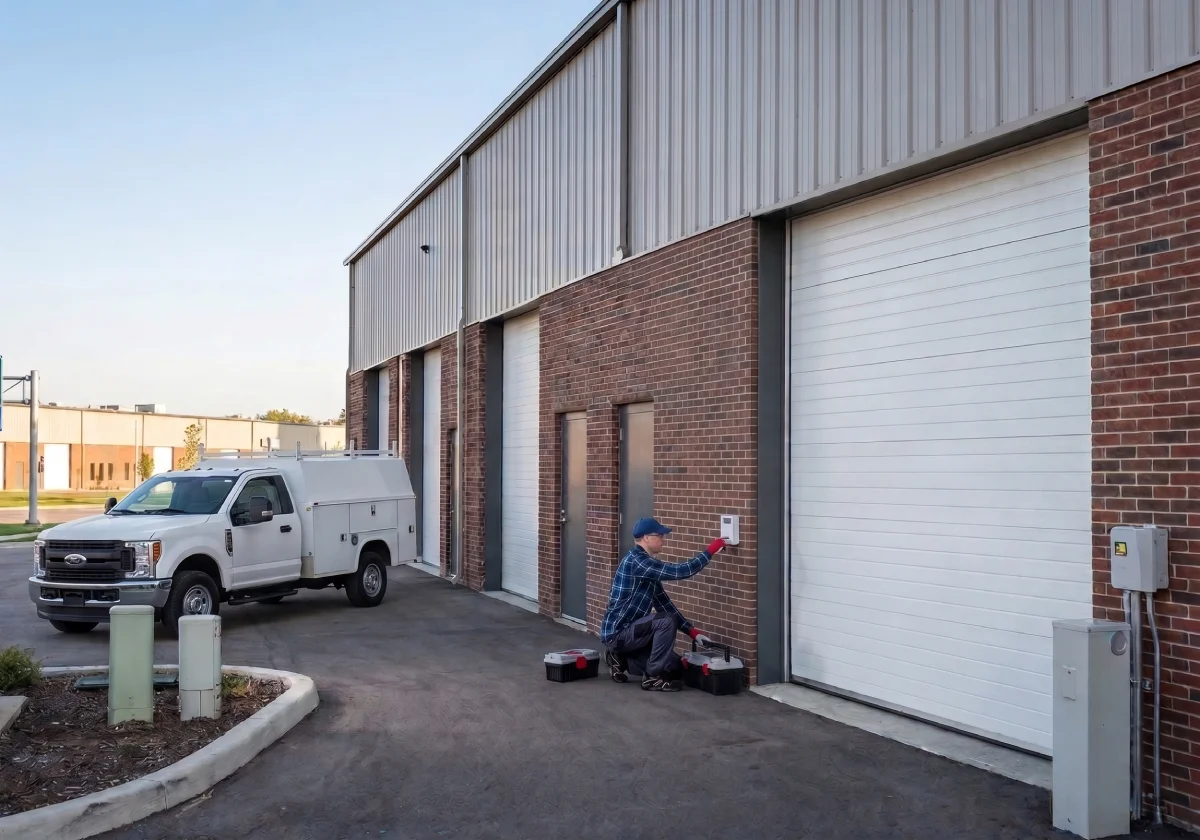
Every year, the first week of December is when our phones ring the most. The temperature drops, the first snow hits Metro Detroit, and facility managers suddenly realize their doors aren’t sealing, the openers are straining, and the weatherstripping is letting cold air in. We get the same question every time: how often should I have been servicing this door?
The honest answer depends on how hard you’re running it. After decades of maintaining doors on everything from single-bay auto shops in Sterling Heights to high-volume distribution centers near Detroit’s I-75 corridor, we’ve broken commercial garage door maintenance down into three usage tiers that cover almost every business we work with.
Michigan’s climate makes this more than a convenience question. When temperatures swing from 35°F to 15°F overnight, moisture in track joints and hinge pins can freeze, adding resistance that the opener has to strain against. Over a winter, that strain adds up. Regular maintenance isn’t just about extending the life of the door – it’s about making sure that door still opens and seals properly on the coldest morning of the year.
Recommended Service Schedule by Usage
High-Cycle Warehouses & Distribution Centers – every 3 to 4 months
Facilities where doors operate multiple times per hour see the fastest wear on rollers, springs, and opener components. At this cycle count, hardware fatigue shows up in a matter of weeks, and small issues become expensive failures quickly.
Moderate-Use Facilities & Active Loading Docks – every 6 months
Businesses with regular daily traffic – a handful of deliveries or vehicle movements a day – should plan on a biannual service visit. We recommend this for most retail loading docks, service garages, and light-industrial operations, timed ideally before and after the harshest winter months.
Low-Use Buildings & Storage Access – once a year
For doors that open no more than once a day, annual maintenance is typically sufficient. Even at low usage, seasonal temperature swings still stress hardware and seals, so we don’t recommend skipping service entirely.
What a Commercial Service Visit Actually Involves
A proper maintenance visit isn’t a quick glance and a squirt of oil. Here’s what we check on every commercial call:
- Inspect high-stress hardware – springs, cables, rollers, and hinges, looking for wear, corrosion, or fatigue before they become failure points
- Test safety features – photo-eye sensors, auto-reverse function, and manual release mechanisms, all required to perform correctly under commercial liability standards
- Lubricate moving parts – hinges, rollers, and track contact points, using lubricant rated to hold up under temperature swings rather than gumming up or thinning out
- Check alignment and balance – verifying the door travels evenly and spring tension is properly balanced, since a misaligned door puts uneven strain on the opener
- Tighten hardware – bolts, brackets, and track fasteners loosen gradually from daily vibration and cycle count
- Evaluate weatherstripping and seals – critical heading into winter, when stiff or cracked seals let in cold air and drive up heating costs
- Test the opener’s force settings – confirming the door isn’t straining against resistance it shouldn’t have to fight
Why Regular Maintenance Matters More in Michigan
Freeze-thaw cycles are hard on every moving part of a commercial door. Metal contracts in the cold, rubber seals stiffen, and road salt tracked in by vehicles accelerates corrosion on springs and hardware. A door that’s serviced on schedule handles those seasonal swings without issue. A door that isn’t will run into problems in winter more often than not.
If you’re running commercial garage doors in Auburn Hills or anywhere else in the region, building maintenance around our climate – not just a generic calendar – is what actually prevents downtime. During the January 2024 cold snap that sent Detroit temperatures to -10°F, we saw which doors had been properly maintained – and which ones hadn’t. The gap was unmistakable.
When to Call a Professional
Routine visual checks are fine for in-house staff, but bring in a professional when:
- Springs or cables show visible wear, rust, or fraying – these are under serious tension and not safe for in-house repair
- The door is cycling unevenly, making grinding or straining noises, or reversing unexpectedly
- Weatherstripping is cracked or the door isn’t sealing tight against the floor
- It’s been more than the recommended interval since the last professional inspection
- Any safety feature – sensors, auto-reverse – isn’t functioning exactly as it should
A malfunctioning commercial door isn’t just an operational headache. It’s a liability and security risk, and in winter, an open gap in your building’s climate control.
A Local Example: Prevention vs. Repair
Last winter, we got a call from a distribution center in Sterling Heights. Their high-cycle loading dock door had been acting up for weeks – grinding noises, slow operation, occasional reversing. They’d been putting off a service call.
When we arrived, the springs were showing visible rust and fatigue. The rollers were worn down to metal. The weatherstripping was cracked enough to let cold air and moisture in. A maintenance visit six months earlier would have caught all of it. Instead, the repair was more extensive – and they had to run their operation around a partially working door for a day while we got the parts in.
They’re now on our quarterly schedule.
Schedule Your Maintenance with a Team That Knows This Climate
We’ve been maintaining commercial doors across Metro Detroit for over 30 years, through enough Michigan winters to know exactly where hardware fails first and why. Our technicians don’t just run a checklist – they inspect for the specific wear patterns our climate causes, so small issues get caught before they turn into a door that won’t open on a Monday morning.
If you’re running commercial doors in Metro Detroit – through our winters, our freeze-thaw cycles, and our road salt – you need a maintenance schedule that matches your usage and our climate. We’ve been doing this long enough to know exactly what fails and when.
Contact Pioneer Door today to schedule your next commercial maintenance visit.